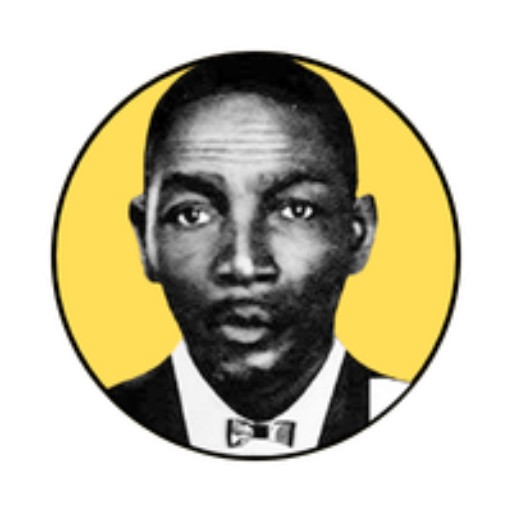
One of the legacies of Thomas Vincent Ramos is the narrative of Garifuna History, particularly two mass migrations to Belize in 1802 (at Yarborough in Belize City) and 1823 (at Dangriga, Stann Creek). He produced a book on Carib History in 1943.
The narrative which follows is mostly derived from T. V. Ramos’ account, handed down to his children, including Abraham and Carl Ramos, who themselves penned narratives on Garifuna History in Belizean newspapers of their time. This timeline is updated with key facts by Adele Ramos, former Assistant Editor at the Amandala newspaper.
The traditional knowledge handed down by Ramos extended prior to 1635. However, for this version, we begin at Yurumein—the Caribbean island of Saint Vincent and the Grenadines considered to be the birthplace of the Garinagu—where our ancestors, who were being brought through the Transatlantic Slave Trade to the Americas, found refuge after surviving two Spanish shipwrecks.
Timeline: 1635 – 2026
1635
Two Spanish ships wrecked off the coast of St. Vincent – West African slaves escape to the island, where they found the Yellow Caribs, a group which emerged from the intermarriages between the Venezuelan Caribs and the island Arawaks.
1675
Another shipwreck brought another wave of Africans to St. Vincent. Also, African slaves who had escaped nearby slave plantations from places like Jamaica found their way to the island.
1750
The new race of people – today called the GARIFUNA or Black Caribs, which emerged on the island of St. Vincent through the integration of 3 peoples: the Arawaks, the Yellow Caribs and the Africans – are said to have grown strong and prosperous on the island.
1763
British colonizers established presence on the island; French had already partially colonized the territory. British and French were fighting for territorial control. The Garifuna sided with the French, with whom they had developed a trading relationship after an informal war truce/peace pact.
1763-1795
32-year conflict between the Caribs and the Europeans, particularly the British. There was some intermarriage also between the Caribs and the Europeans, resulting in the so-called Red Carib race, known from the island of Dominica.
1795
On March 14, Paramount Chief of the Black Caribs, Joseph Chatoyer died in battle. It is reported that Chatoyer’s daughter, Gulisi was one of the first to settle Belize. At the age of 24, she reportedly came to Belize from Honduras, with 5 sons.
1796
The French surrendered to the British; but the Caribs kept up the fight. They were famed as “belligerent.”
To subdue them, the British -who were after the land they had cultivated- torched their possessions. There were two major wars: the Caribs won the first in 1795, and the British won the second sometime in 1796.
1797
Just over 5,000 Garinagu were said to have “survived” the wars. In March, the British launched a manhunt for the Garinagu. They wanted to use those who had survived the bloody wars to help them fight against the Spaniards. They were expecting a war, which came in 1798 – the historical Battle of St. George’s Caye, and had uniforms made for the Garifuna men.
One year before the Battle of St. George’s Caye, the British packed up about the Garinagu into ships, reportedly with the intent of sending them to Belize. The popular traditional accounts say that they were “deported” from St. Vincent to Roatan, Honduras – then a Spanish colony. Perhaps the Garinagu refused to fight!
The Garifuna people were transported from Bequia in St. Vincent to Roatan, and half of them reportedly perished from the scourges of disease, starvation and harsh treatment by colonial powers.
1799
First reported contact with Belize.
1801
On March 25, Garinagu arrive at Belize City, spotted many white buildings near the sea and called it by the name YARBURA – which later became Yarborough. They were only allowed to stay temporarily for 2 days.
1802
150 Caribs settled in Belize at Yarborough. Some surnames of the settlers include: Avaloy, Avila, Beni, Blanco, Cayetano, Ciego, Diego, Ellis, Enriquez, Guerrero, Lambey, Lewis, Martinez, Moguel, Noguera, Nunez, Rhys, Reyes and Serano. One of the prominent leaders at the time was Benito Beni.
Village of Red Cliff – present day Barranco – established.
Today, Barranco, one of the first Garifuna communities in Belize, is one of the last havens where the Garifuna culture is preserved in one of its most dynamic forms.
1823
375 Garinagu recorded at Yarborough in Belize City.
On March 31, Elejo Beni, Romauldo Lewis, Elias Martinez, Alejo Lambey joined by Alejo Beni’s cousin, Benito Beni, their interpreter, approached Sup. Major-General Edward Codd (1823-1829) for permission for Garinagu to migrate from Honduras.
On Wednesday, November 19, 1823, approximately 500 Garinagu settled in Belize. This was the largest recorded exodus of Garifuna to Belize.
300
300 – Dangriga (then Stann Creek Town)
125
Punta Gorda (Toledo)
28
Seine Bight
15
Jonathon Point
8
Newtown (desolated by hurricane)
1941
First celebration of Garifuna Settlement Day in Belize, called Carib Disembarkation Day. Founded by Thomas Vincent Ramos.
1943
Ramos lobbied for a public and bank holiday and succeeded two years after celebrations began. Granted only for Stann Creek.
1944
Holiday extended to the Toledo District, where the second largest concentration of Garifuna lived.
1944
Holiday extended to the Toledo District, where the second largest concentration of Garifuna lived.
1990
A bust was erected in his honor in Dangriga, in addition to a previously erected monument at the Princess Royal Playground.
2001
On November 15, UNESCO made a public proclamation of the Garifuna culture as a “Masterpiece of the Oral and Intangible heritage of Humanity.
2002
On November 13, the Order of Belize will be bestowed posthumously upon T. V. Ramos, now recognized as one of Belize’s true patriots.
2026
thomasvincentramos.info is launched!
Explore the journey of the Garinagu using with this ArcGIS StoryMap
or access directly here